Everyone is talking about Web 3.0 and it’s “driving technologies” Blockchain, Bitcoin, NFT or the Metaverse. Terms that belongs to every company’s roadmap if it’s want to be innovative. But if you try to find information about — let’s take Bitcoin — you’ll quickly find yourself on some cryptocurrency site that is celebrating the technology, declaring a growth of 1.000 % and then trying to sell you something. That’s where I’m jumping in: Let me try to describe those four main technologies as simple as possible, without the hype. And at the end you’ll kindly buy my very arty NFT .
Disclaimer: I’m pretty sure there are some details missing, maybe even important facts. Tell me, I will add it. This article is under permanent construction.
The Metaverse
What is the Metaverse?
The term itself comes from the science fiction author Neal Stephenson. He “invented” it for his 1992 story “Snow Crash”. The concept of the Metaverse is quite similar to the well-known Cyberspace, a term first used in 1982 by author William Gibson. While “cyber” comes from the greek word “kybernetes”, meaning “steersman”, meta comes from the greek word for “beyond”.
The suffix verse will probably remind you of the word universe which comes from the Latin word for “all things”. And the suffix space, yeah well I guess you get it, is not so far away from the universe.
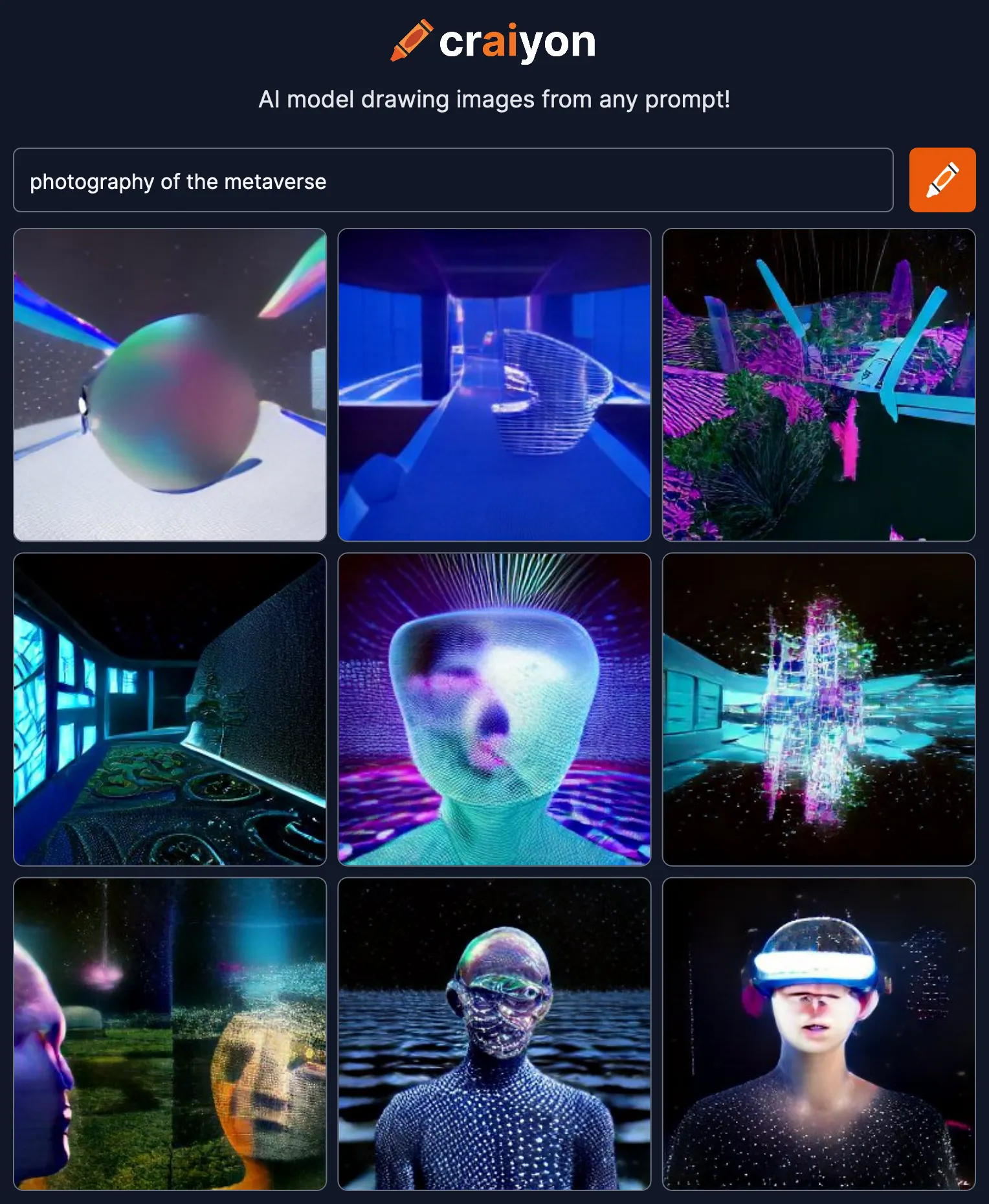
Basically both terms, Metaverse and Cyberspace, could stand for a virtual reality where you can do everything you want to do — respectively the “owner” allows you to do.
The main idea is to use the Metaverse not only to play games, but also to do everyday stuff: to buy shoes, operate machines, visit your lawyer and cut the hair of your virtual avatar. And if you like abbreviations, here are some: You can enjoy the Metaverse as a virtual reality (VR) but also augmented or mixed reality (AR, MR).
The idea of the Metaverse holds room for philosophical discussion. It sounds tempting to do everything online. What if you don’t need the real world anymore? Imagine you will be connected to the Metaverse from the very beginning of your life. Imagine that every sense will be simulated and your needs are satisfied by stimulation of particular parts of your brain and youl’ll be fed by nutrition infusions. Imagine that you will start using a Metaverse inside the Metaverse! Are we already living in a Metaverse?
Is the Metaverse new?
No. As already mentioned, the term itself is around 30 years old. And also the technical idea is not new: In 2003 a platform called “Second Life” was launched. Second Life was not only about gaming, it was also about socializing or establishing a virtual Alter Ego. The current media circus around the Metaverse becomes a hype driven by improved technical possibilities.
Facebook, looking for new areas of operation, pulled this pretty smart marketing move by naming themself “Meta”, which could lead to the assumption that they invented the Metaverse — in fact they just trying to hook on this trend.
Does the Metaverse requires NFT or Blockchain?
No. It may rely on the Internet, that’s all. It relies on someone who is hosting the software and take care of it and it’s users. There is no reason that the Metaverse will only work because of and with Blockchain, Bitcoin and NFT.
Sure you could say, that you need some kind of currency. But that would mean that the Metaverse is focussed on consumption. We don’t want that. Right? Even then, why shouldn’t you use your good old PayPal account with 2FA?Because a Bitcoin transaction is safe? In general: Right. But if you use an intermediate — and that’s what you do — you create a weak point.
How can I enter the Metaverse?
There is not this one “Metaverse”. Right now there are a couple of virtual worlds out there, hosted by different companies. If you for example search the Oculus store for “metaverse” you will find a couple of apps claiming to take you into the Metaverse. If you search the web for Metaverse, you will find a couple of providers offering you access to “their interpretation” of the Metaverse, and they are not even connected.
Compared to the World Wide Web — which simply describes all conected web sites, the Metaverse is a term not covered by one single solution. Maybe sometime in the future someone develops a protocol or a standardized system like Tim Berner Lee once did for the World Wide Web. Although there is not “one Metaverse”, I will stick to this term, because “Metaverses” just sounds strange.
If you want to enter one of those Metaverses (sounds strange, right?), a virtual head set is the most common way. This will give you the full experience. But you could also just open a browser and go to sandbox.game or decentraland — two quite populare but separated virtual worlds — and walk through the virtual landscapes there, purchase land, talk to people. Even a smart Smart TV could take you into the Metaverse. In the far future it’s maybe an USB interface in the back of your head. Then the Metaverse will probably be more than an audio-visual simulation; it will probably feed all other senses.
The Blockchain
What is the Blockchain?
A blockchain is kind of a database, but please don’t call it that. A block is a container for data and therefore information. As all blocks are connected they eventually form a chain: The blockchain. How the blocks are connected is one of the most important selling points: Every block comes with a block header that contains, among other fields, two important fields: One field holds a hash for all the information of the current block’s payload, another field contains the hash for the previous block’s header. This makes the information within the blockchain secure: If you tamper the data of one block, you need to re-create all the hashes of the following blocks.
Is there one Blockchain?
No. As more and more, in fact thousands, new application areas emerged, there are all kind of blockchains out there in the wild. There are public and private blockchains, there are different confirmation processes (describing how a new block is considered to be valid) and there are blockchains holding cryptocurrencies, contracts, applications and everything else that could possibly be digitalized.
Is the Blockchain new?
The first mentions of this concept can be found in the early 1980s. In 2008 the main idea was improved by a yet not know individual (or group?), who proposed some additional features, like decentralization and hashing. The fact that this mechanism is at least 14 years old, which is a lot in information technology, should show that a blockchain is an old hat.
Is the Blockchain decentralized?
Yes. The concept itself is based on a network of connected hosts. Every host holds a full copy of a blockchain and every host can confirm new blocks. A blockchain is fully decentralized by design.
But…
The service based on a blockchain are not necessarily decentralized. Setting up the Bitcoin blockchain is not a simple thing . And that’s the documentation of one of the most popular Blockchain projects, don’t try to get your head around installing the more niche ones.
The concept is totally decentralized, but to make it usable by the public and therefore use it in a commercial way, a lot of companies arised in this field of business. They are offering access to several services hosted on the Blockchain. And if there’s a single company, it’s not centralized anymore. Now you have a single point of failure.
Besides that, from a technical perspective this “decentralisation” is not a big deal. Modern databases are able hold up with this feature. A lot of popular databases support replication across several locations, like MongoDB and its replica set architecture. Not peer-2-peer enough for you? There are even real peer-2-peer databases, like OrbitDB.
Is a Blockchain secure?
The mechanism itself is pretty secure and safe against tampering or manipulating existing information. That is a big win. Though this does not mean that all applications based on the blockchain are secure. First of all: Security is not inheritable. As just mentioned above, the blockchain comes to you via a provider — the vulnerable point.
It happens on a regular base , that people get scammed or loose money when dealing with blockchain based services. Besides that, the current implementation with SHA256 may loose it’s weight as soon as we are able to use Quantum computers. And that only describe two weak spots, there are way more, starting with “social engineering” and up to the 51% percent attack.
Is a Blockchain the better database?
While it’s arguable that a blockchain is a database at all, I would never consider a blockchain the better database. As always it depends on the use case. A Blockchain is an option to store data in safe way, but you cannot — like it’s just not possible — change the data in a blockchain. You would need to add a new block. Besides that, a blockchain is probably too slow o be a good database.
Is the Blockchain useless?
A blockchain has three main features: It’s transparent, it’s secure and it’s running decentralized. It’s not useless, it’s a nice piece of technology. But it’s not the answer to everything. It’s best known use case is the transaction ledger. You can also use it to store security relevant source code in it or contracts (see → NFT). But that does not mean, that you must implement it into your business processes. It’s just another option if your looking for solutions.
The Bitcoin / the Cryptocurrency
What is the Bitcoin? What is a Cryptocurrency?
The Bitcoin is the oldest cryptocurrency, “found” in 2008 by the mysterious Nakamato — if this is his real name. Bitcoin is using a blockchain as it’s ledger. And that’s why it’s called a Cryptocurrency: A blockchain uses cryptographic algorithms to protect it’s integrity. While Bitcoin is the mother of all cryptocurrencies, all her successors are called Altcoins — alternative coins. Except maybe Ethererum , another quite old and important cryptocurrency.
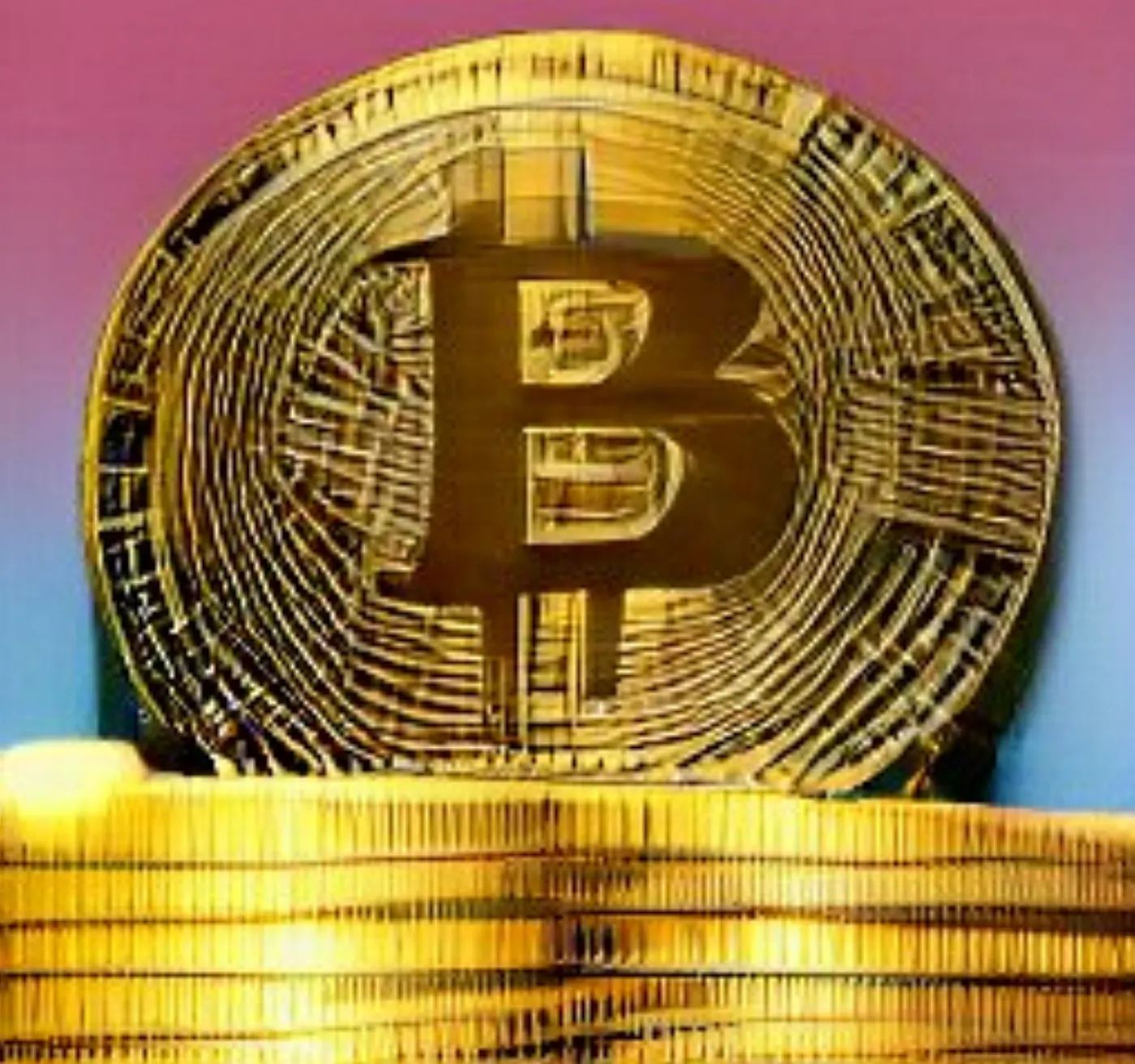
The term currency however is a little misleading for two reasons. First: As everyone could set up a cryptocurrency this kind of contradicts the concept of a classical currency, controlled by a governmental entity. Still it allows interesting new concepts within our economic system: Theoretically everyone is able to create a currency to exchange values.
Second cryptocurrencies implement dozens of different concepts and follow different goals; they are not only for payment: Some of the Altcoins are used for payment, some for voting in a network, some of them are just for fun, like the notorious Dogecoin.
Right now there exist more than 10.000 so called cryptocurrencies; compared to 160 official classical currencies.
Are cryptocurrencies anonymous?
Yes. The underlying concept supports privacy and anonymity — but it’s hard to maintain for several reasons.
How to get your hands on Bitcoin? You can either try to participate in the high competitive market of mining or you need something in exchange, like a real currency. There are some Bitcoin ATMs where you exchange real money into Bitcoin. But this is quite a limited service. You could also purchase vouchers or cash cards, like PaySafe, to buy Bitcoin online.
That are your options. For the typical user this may be to complicated and he or shee will just create an account with an exchange and buy some Bitcoin with his credit card. Anonymity: Gone.
And that’s not even all: Most governments try to regulate and control cryptocurrencies to prevent criminal use or financial “gambling”. Anonymity: Gone, now for sure.
In fact there are Altcoins focussed on privacy, the so called PrivacyCoins, like Monero. Still the problem occurs, that you need to get your hand on those currencies.
You could maintain anonymity but it requires some efforts. Paying your Pornhub account to hide it from your wife is maybe not worth the effort. Setting up an anonymous payment channel to support an endangered informant? Totally worth it. To support illegal weapon trades? Morally not acceptable, but probably your best option.
Anonymity is in the DNA of Cryptocurrencies but it’s not a guaranteed feature.
Are cryptocurrencies decentralized?
The same answer applies here: It depends! The underlying technology, the blockchain, is per definition based on a decentralized network of nodes. But again the reality kicks in: Imagine you want to buy something online and want to pay using Bitcoin. You need to set up a Wallet or even a Full Node. That’s not “plug-and-play”.
That’s why third party payment provider emerged. They enable the common user to access the cryptocurrency space. No matter if it’s a cryptocurrency exchange or a payment provider: It’s a platform. And platforms contradict the idea of a decentralized payment system. Again.
And that’s not all. The confirmation of new blocks via the so called “Proof Of Work” requires a lot of computing power. Currently a few big players in this mining business hold the “ computing monopoly ” for this process for the Bitcoin Blockchain.
Of course there are alternative methods of block confirmation, like the Proof of Authority. Meaning: Only a chosen authority is allowed to confirm — do you see the conflict between “decentralization” and “authority”?
What about “Proof of Stake”? This allows a conformation by participating parties with a given amount of staked value. This is probably the most “decentralization” we could get.
Decentralization is in the DNA of Cryptocurrencies but it’s not a guaranteed feature.
Are cryptocurrencies the future of payment?
This is actually hard to imagine.
Let’s start with the speed of processing: Bitcoin relies on the “Proof of Work” concept. And this literally dictates a 10 minute time-frame before a transaction will be confirmed. That does not sound like a convenient payment replacement when you’re just about to get a coffee at Starbucks, right?
There are approaches to solve this problem. One promising idea is the “Lightning network”: a network that connects two payment participants with a payment channel and allows immediate payments. But you need to consider two things: The payment channel has to be initialized on the Blockchain: Meaning: It’s not something that you set up ad hoc. Also the Lightning network is disconnected from the Blockchain. You loose all the advantages the Blockchain offers. That does not mean that the Lightning Network is insecure. It has some sophisticated implementations to grant secure transactions. But it’s not the Blockchain. You want to secure financial transactions on the Blockchain, but you need to implement an additional layer as an intermediate ledger? You see the irony.
The next thing is the volatility of most cryptocurrencies. In 2010 you could buy 1 Bitcoin for 0,08 USD. Ten years later Bitcoin hit the 50.000 USD mark. If you want to sell goods for Bitcoin it requires a completely different price calculation system for the whole supply chain. Money needs to meet two requirements: It has to work as an exchange medium and as a value storage. Something that a cryptocurrency hardly can cover, at least the “value-part”.
 Source:
https://www.reddit.com/r/bitcoinmemes/comments/wq6abz/because_bitcoin_leads_to_bosslessness/
Source:
https://www.reddit.com/r/bitcoinmemes/comments/wq6abz/because_bitcoin_leads_to_bosslessness/
The NFT
What is a NFT?
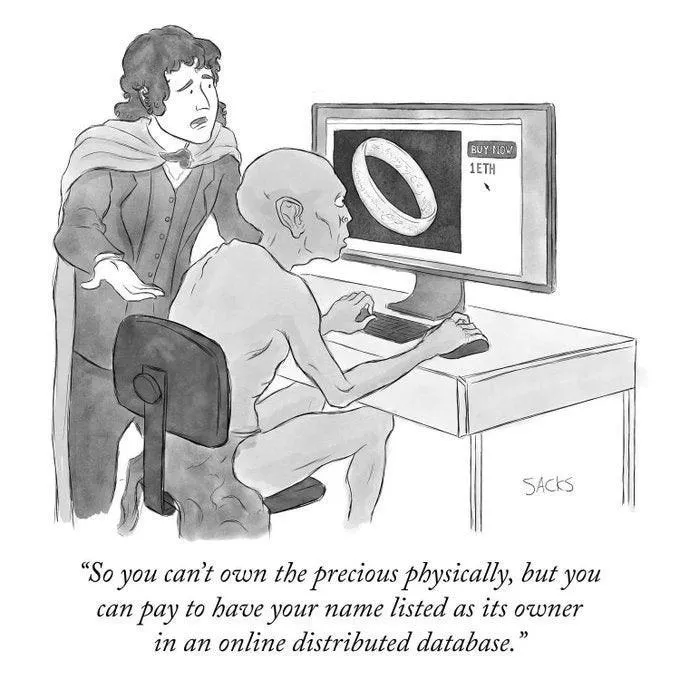
NFT is short for Non-Fungible Token and is one famous application based on the blockchain technology. The token is like a contract containing a reference to a (digital) asset. And that asset can be everything from a piece of art to a software. You also may reference to a physical asset. In short: A NFT can be understand as an evidence of ownership. The token respectively the contract is saved on a blockchain and therefore the contract ought to inherit all the blockchains advantages: It cannot be tampered.
Is a NFT secure?
This depends on how you define “secure” and what do you want to achieve.
The proof of ownership is secure, as it’s written to a blockchain.
But…
…the resource itself is not secure. The token is referring to a resource that has to be hosted somewhere. If the resource is lost, the token has no value. Remember my very arty NFT I advertised at the top of this article? Well, you don’t need to buy it. You can download it from here:
1[https://lh3.googleusercontent.com/fcjOKIviiAaHM9Qzjj6QM8YFs_ALfBlan4CdJcI24jPl49VlGdjz-dQwMx5gVbHsFpY9tw3Hih43Ts7vkiCND8zaUG3OQkREbfIM4Ck=s0](https://lh3.googleusercontent.com/fcjOKIviiAaHM9Qzjj6QM8YFs_ALfBlan4CdJcI24jPl49VlGdjz-dQwMx5gVbHsFpY9tw3Hih43Ts7vkiCND8zaUG3OQkREbfIM4Ck=s0)
(And that’s why I’m giving it away for free, it’s public, anyway)
As you can see from the host — googleusercontent —the NFT exchange OpenSea does not even host the file on it’s own. If google takes the file down, it’s gone.
Of course there exists solutions where the resource is stored inside the blockchain and therefore uses the advantage of decentralization — but it’s not a granted feature. Ask for it.
And finally: The resource is not secured against unwanted duplication. Everyone could download the very precious bored ape .
Let’s sum it up: NFT have an ideational value.
Is NFT a good investment, like rare art?
The previous paragraph explained the background, let’s emphasize it: If you want to speculate: Buy NFT. But don’t spend your hard earned money on NFT. Remember this trade from 2021? Sina Estavi bought the first Tweet by Jack Dorsey for 2.9 Mio. USD. In 2022 he tried to sell it . The highest bid was around 7,000 USD. This is the Tweet in question, you can read it for free and you can even print it out and put it on your wall:
just setting up my twttr ( Jack Dorsay, 2006 on Twitter )
Cointelegraph said that there are nine factors determining the value of a NFT : Rarity, Utility, Tangibility, Interoperability, Social proof, Ownership history, Liquidity premium, Speculation, Continual change in the NFT ecosystem.
Conclusion
Don’t let the hype delude you . The Blockchain is an interesting technical concept, but it’s not the solution to everything. It most likely solves a problem. A problem that you most likely do not have.
NFT and cryptocurrencies are interesting concepts based on the blockchains. Cryptocurrencies undoubtedly will have a future. At least a billion dollar industry emerged around those products, but there’s also a pretty good portion of scam.
And the “Metaverse”? Did you see the screenshot from inside it? Does this look like the future to you?
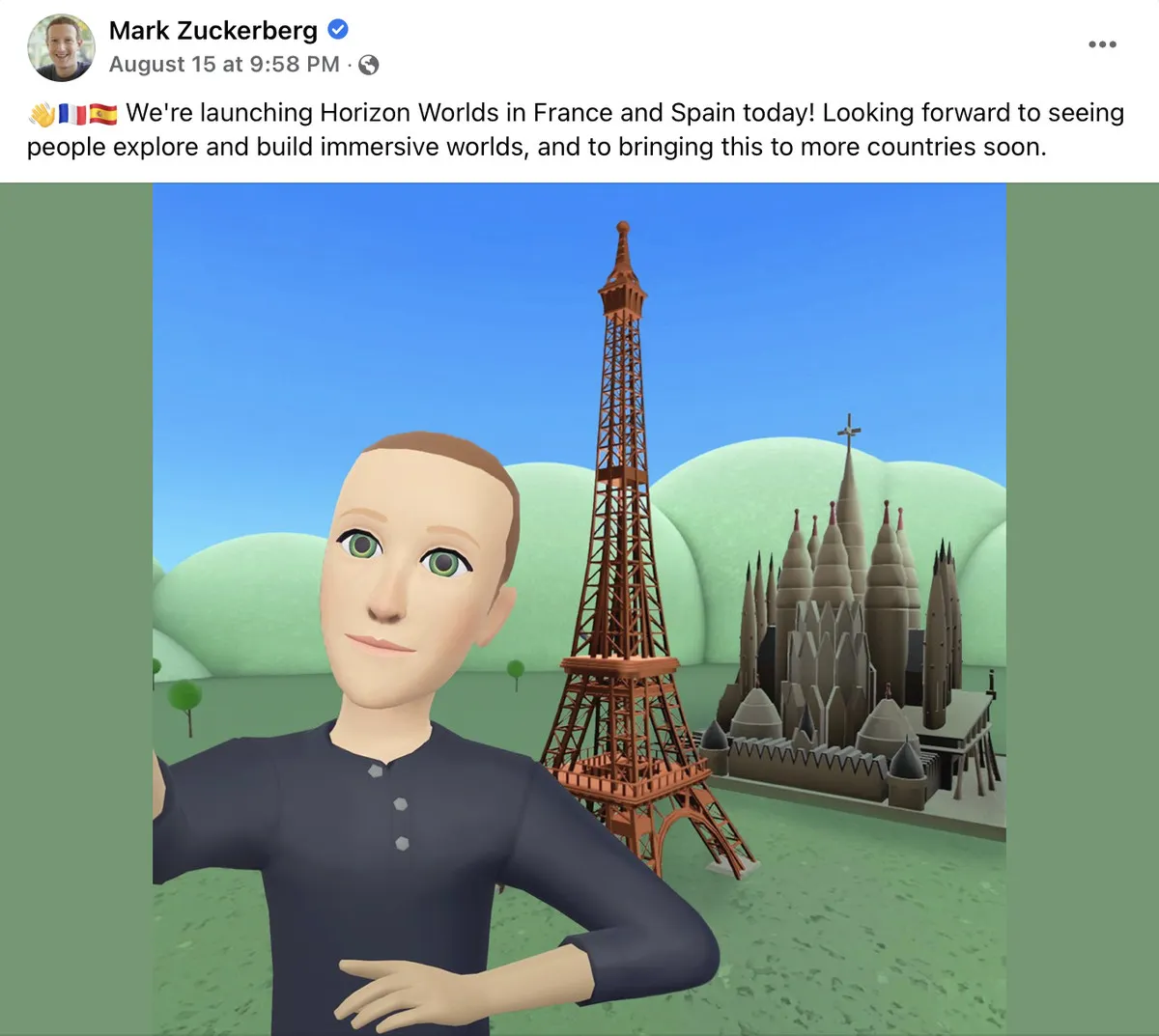
The whole story could use some buzz-diet. When the World Wide Web entered the stage it was not driven by profit. Look who’s behind the Metaverse. Meta’s main source if income is digital advertising.
As a good read I suggest you this collection of dozens of critical articles about all those new technologies https://github.com/life-itself/web3 .
Stay sharp - but don’t be to pessimistic. You could miss the next big thing.